Oliver McGowan Training: Mandatory CQC Requirements Guide

Updated: 1 day ago
Completing your training matrix used to be a matter of internal best practice, but the landscape has shifted into a strict legal mandate. Many providers still feel a sense of unease when trying to decipher the nuances of autism awareness and Oliver Mcgowan training - mandatory requirements that now influence CQC ratings. It's no longer enough to simply offer a general overview; you must ensure every staff member, from the boardroom to the front line, understands their specific obligations under the Health and Care Act 2022.
We recognise that the distinction between Tier 1 and Tier 2 requirements often creates unnecessary stress for busy managers. This guide provides the clarity you need to master these statutory obligations, ensuring your organisation remains fully compliant and ready for inspection. We'll examine the specific training levels required for different roles, explain how to evidence a genuine shift in care culture, and show you how to transform these regulations into a robust framework for improved patient safety. By the end of this article, you'll have a clear roadmap to handle the complexities of mandatory training with total peace of mind.
Table of Contents
The Evolution of Mandatory Training: Understanding Statutory Requirements
The Health and Care Act 2022 transformed the way providers approach staff development by making learning disability and autism training a legal obligation for all CQC-registered services. This change followed years of advocacy after the tragic, avoidable death of Oliver McGowan. It's designed to dismantle the deep health inequalities that autistic people and those with learning disabilities face in the healthcare system. Whilst several providers previously relied on internal workshops, the government has now positioned the Oliver McGowan Mandatory Training as the gold standard and preferred programme for the sector.
Why "Awareness" is No Longer Enough
Generic training videos often fail to capture the complexity of person-centred care. The new 2025 Code of Practice, finalised on 6 September 2025, establishes definitive standards that organisations must meet by 2026. Understanding autism awareness and Oliver Mcgowan training - mandatory requirements means moving beyond a "tick-box" exercise to a framework that's appropriate to the specific role of each staff member. Whether a colleague is in a clinical or administrative position, their training must reflect the level of interaction they have with service users. Consistency is key here.
The Legal Consequences of Non-Compliance
Failing to implement these standards isn't just a training gap; it's a regulatory risk. The CQC has the power to issue warning notices or take formal enforcement action if providers fall short. Regulation 18 of the Health and Social Care Act 2008 (Regulated Activities) Regulations 2014 requires staff to receive appropriate training, whilst Section 22 of the Health and Social Care Act 2008 sets out the statutory requirement for the Secretary of State to issue a Code of Practice regarding training on learning disability and autism that registered providers must follow. Compliance ensures your organisation remains a safe environment whilst protecting your professional reputation.
The Oliver McGowan Tiered Framework: Mapping Staff Roles
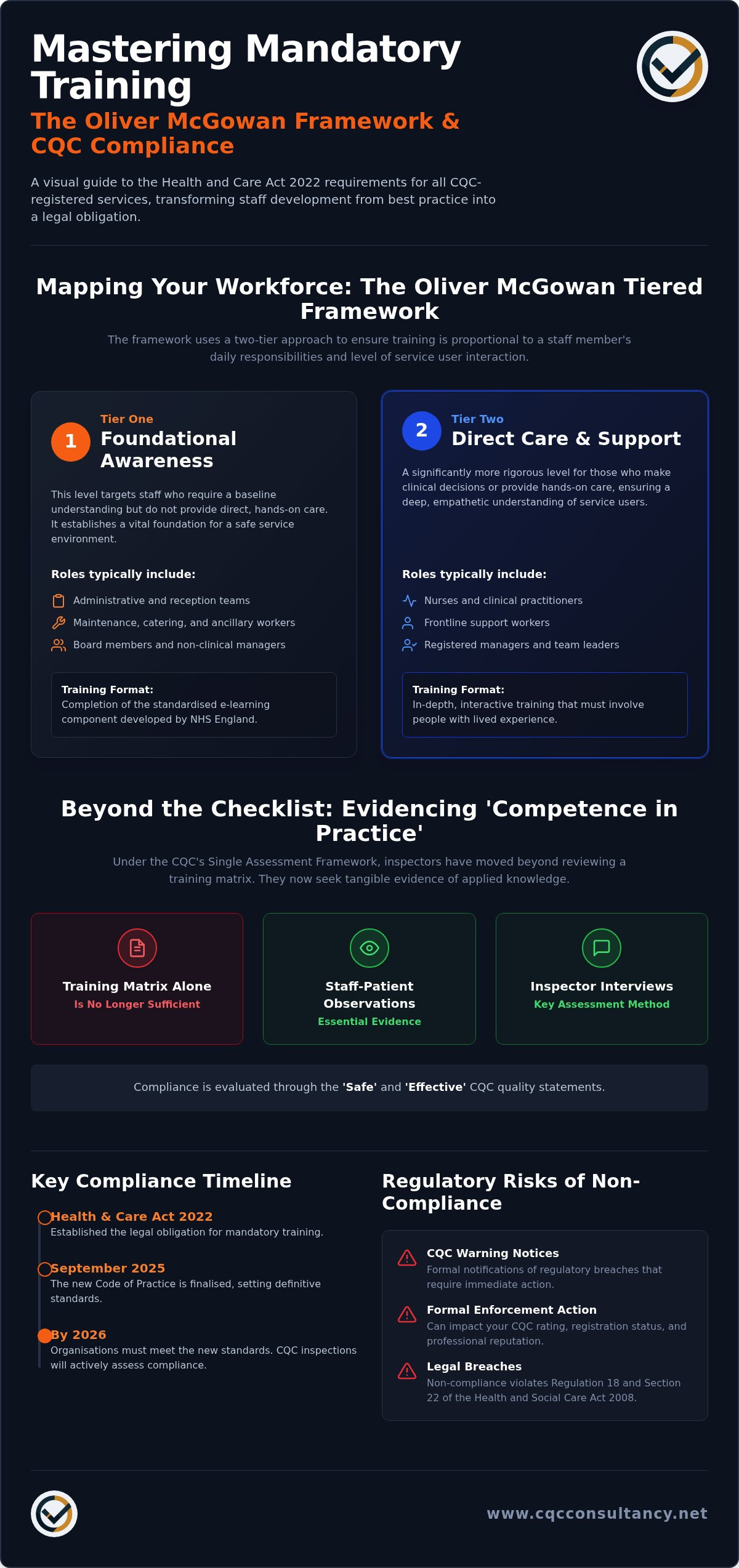
The challenge for many providers isn't just delivering training, but correctly categorising their workforce to ensure compliance. The framework uses a two-tier approach to ensure autism awareness and Oliver Mcgowan training - mandatory requirements are met proportionately to a staff member's daily responsibilities. By 2026, CQC inspectors will expect to see a documented rationale explaining how you've assigned these tiers across your entire team. Precision here is vital.
Tier 1 Requirements: General Awareness
This level targets staff who require a baseline understanding but don't provide direct care. It covers the fundamentals of communication and the specific needs of autistic people. This tier is typically assigned to:
Administrative and reception teams.
Maintenance, catering, and ancillary workers.
Board members and non-clinical managers.
Staff must complete the standardised e-learning component developed by NHS England to satisfy these requirements. It's a vital foundation for maintaining a safe service environment whilst ensuring every staff member understands the core principles of the Act.
Tier 2 Requirements: Direct Care and Support
Tier 2 is significantly more rigorous. It's designed for those who make clinical decisions or provide hands-on care. This includes registered managers, nurses, and frontline support workers. Crucially, this tier requires in-depth, interactive training that involves people with lived experience. This isn't just a tick-box exercise; it's about ensuring staff gain a deep, empathetic understanding of the people they support. If you're unsure how to map "grey area" roles like care coordinators or team leaders, our compliance guidance provides the steady hand needed to build a robust mapping strategy that stands up to scrutiny. Accurate role mapping prevents enforcement action later.
Evidencing Compliance for CQC Inspections in 2026
Under the Single Assessment Framework, the CQC evaluates your commitment to staff development through the "Safe" and "Effective" quality statements. Inspectors have moved beyond simply reviewing a training matrix; they now look for "competence in practice" by observing staff-patient interactions and conducting interviews. This ensures that autism awareness and Oliver Mcgowan training - mandatory requirements aren't just met on paper but are actively improving the quality of care provided. You must also demonstrate a clear process for onboarding new starters and ensuring that training is refreshed regularly.
To navigate these changes, many providers utilise our CQC consultancy services for deeper guidance on the new inspection pillars.
Maintaining a Robust Training Matrix
A digital or paper-based record must be instantly accessible during an inspection. However, the real value lies in capturing the impact of the training. Don't just record a completion date. Document how the training has changed staff behaviour or improved specific care outcomes. This level of detail provides the "steady hand" evidence that inspectors need to see to feel confident in your leadership.
The Role of Lived Experience in Training
The Code of Practice is explicit: training must be co-delivered by people with lived experience of autism and learning disabilities. To satisfy an inspector, you'll need to prove your training provider meets these co-production standards. Proving this engagement demonstrates a genuine commitment to the "Effective" quality statement. If you're concerned about your current evidence levels, we can help you prepare. Contact us today for expert compliance guidance to ensure your records are inspection-ready and your team is fully supported.
Bridging the Gap: How Mock Inspections Ensure Readiness
A training matrix confirms that staff have watched a video, but it cannot confirm that they have understood the content. A mock inspection simulates the rigour of a real CQC visit, identifying the specific training gaps that compliance software often overlooks. By utilising former-inspector insight, we conduct a deep dive into staff interviews to see if autism awareness and Oliver Mcgowan training - mandatory requirements have been truly absorbed into your daily operations. This proactive approach identifies red flags before the regulator arrives, such as staff members who are unable to articulate how they support service users with sensory needs.
Testing Staff Knowledge and Behaviour
Our mock inspectors use proven CQC registered manager interview tips to evaluate leadership oversight and staff competence. We look beyond the certificates to verify that reasonable adjustments are a lived reality in your service, not just a policy hidden in a handbook. This process provides the reassurance that your team is prepared for the granular questioning typical of the Single Assessment Framework. You can explore our CQC mock inspection services to secure your rating and ensure your team feels confident under pressure.
Creating a Compliance Action Plan
The outcome of a mock inspection is a clear, 30-day compliance roadmap. We help you move from identifying weaknesses to implementing definitive solutions, such as integrating the Oliver McGowan requirements into your Statement of Purpose. This methodical progression ensures that your organisation isn't just meeting the legal floor but is striving for excellence in patient safety. With a steady hand guiding your preparation, you'll find the transition to the 2026 standards both manageable and rewarding. It's about moving from uncertainty to total preparedness.
Securing Your Compliance Roadmap for 2026
Establishing a culture of inclusion requires more than a simple certificate. You've now seen how the Health and Care Act 2022 mandates specific training levels across your workforce to ensure every staff member is prepared. Mastering the nuances of autism awareness and Oliver Mcgowan training - mandatory requirements ensures your team is equipped to deliver safer, more effective care. By correctly mapping staff roles and focusing on the impact of lived experience, you protect both your service users and your regulatory standing.
Want an expert to check your compliance? See my CQC mock inspection service.
Preparation is the most effective antidote to the stress of a CQC inspection. Our team brings over 12 years of regulatory experience to every engagement, providing bespoke mock inspection reports that highlight exactly where your evidence might fall short under the Single Assessment Framework. Don't leave your rating to chance. Book a discovery call with our former CQC inspectors to audit your training compliance today. We're here to provide the steady hand you need to move forward with total confidence and peace of mind.
Frequently Asked Questions
Is the Oliver McGowan training mandatory for all staff?
Yes, the training is a legal requirement for all staff working in CQC-registered services under the Health and Care Act 2022. This includes everyone from frontline clinicians to administrative and maintenance teams. Whilst the level of training varies between Tier 1 and Tier 2, the obligation to ensure every colleague has the appropriate knowledge is universal. It's about creating a safe, inclusive environment for every service user.
What happens if our staff have done other autism training?
Whilst previous training is valuable, it doesn't replace the need to meet autism awareness and Oliver Mcgowan training - mandatory requirements. The government has designated this specific programme as the preferred standard to ensure consistency across the health and social care sector. You should map your existing records against the new Code of Practice to identify any gaps in content or delivery, particularly regarding the involvement of people with lived experience.
How often must the Oliver McGowan training be refreshed?
Current guidance suggests that training should be refreshed every three years to maintain high standards of care. However, it's vital to monitor staff performance continually rather than waiting for a deadline. If an inspector observes a decline in practice or a failure to apply reasonable adjustments, they'll expect to see immediate remedial action. Keeping your training matrix updated ensures you're always prepared for a regulatory review.
Does the CQC check for Oliver McGowan training during a site visit?
Yes, inspectors actively look for evidence of this training as part of the Single Assessment Framework. They'll review your training records and, more importantly, interview staff to verify that the learning has been put into practice. They want to see that your team understands the specific needs of autistic people and can demonstrate how they've adapted their behaviour to provide safe, effective, and person-centred support.
Can we deliver the Oliver McGowan training in-house?
You can deliver the training in-house, provided your trainers meet the strict criteria set out in the Code of Practice. The most critical requirement is that the training must be co-delivered or co-produced by people with learning disabilities and autistic people. If your internal programme lacks this lived experience component, it won't satisfy the statutory standards. Many providers find that partnering with accredited external trainers ensures full compliance and peace of mind.
Want to talk it through? Book a free 15-minute call


Comments